Guilford Baltimore Home Architecture and Styles
May 28, 2026
May 28, 2026
If you are drawn to Guilford, chances are it is not just because of a single house. It is the feeling of the neighborhood as a whole: curving streets, mature trees, generous lawns, and homes with real architectural presence. If you are trying to understand what makes Guilford so distinctive, this guide will help you read the neighborhood more clearly and know what to look for as a buyer or homeowner. Let’s dive in.
Guilford is a planned residential subdivision of about 210 acres in northeast Baltimore City. The Roland Park Company acquired the land in 1911, the first lots sold in 1913, and development was largely complete by 1950. The district was later listed in the National Register of Historic Places in 2001.
What stands out most is that Guilford was designed as more than a collection of homes. Its plan, shaped by Frederick Law Olmsted Jr., created a neighborhood framework built around curving streets, sidewalks, parks, lawns, mature trees, and generous setbacks. That landscape structure is a big reason Guilford feels cohesive even though the houses themselves vary.
The easiest way to understand Guilford architecture is to separate the setting from the houses. The streetscape stays consistent, while the homes express several early 20th-century revival styles. That balance gives the neighborhood both variety and visual unity.
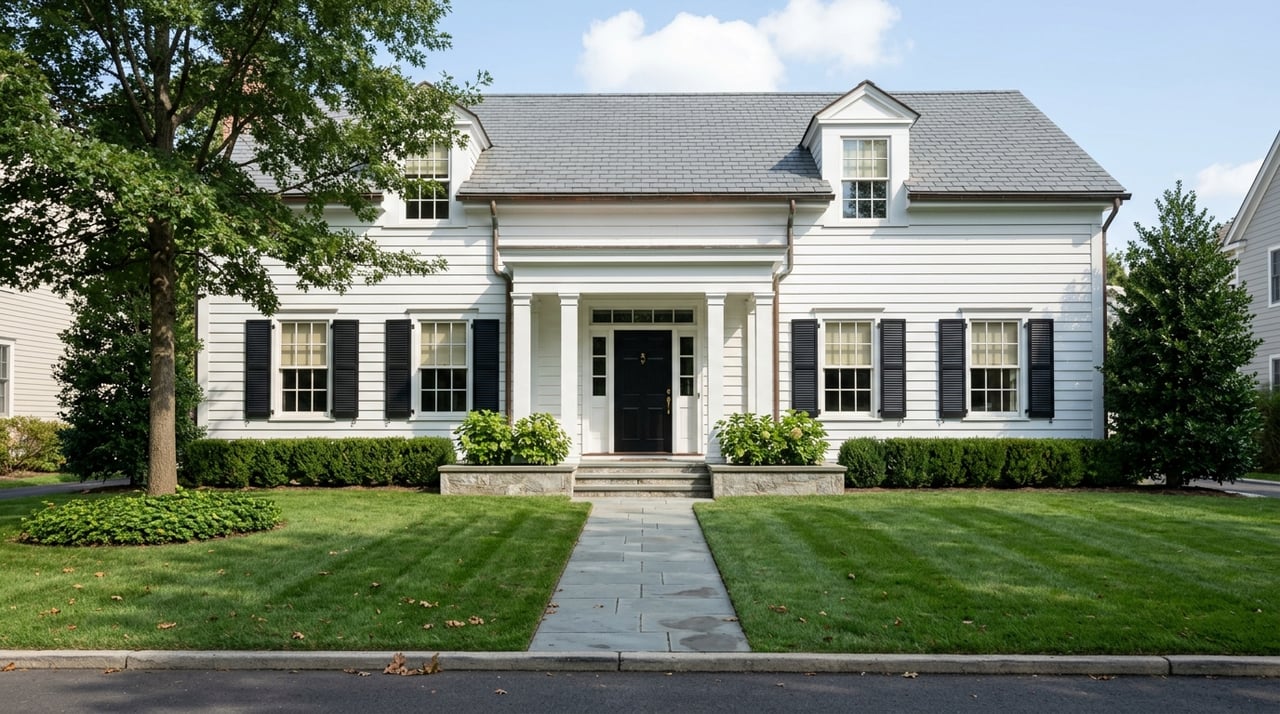
The most common style family in Guilford is the colonial prototype, often described as Colonial Revival. These homes usually read from the street as compact rectangular forms with symmetrical or near-symmetrical facades and classical detailing.
Many also follow a center-hall layout, with a central staircase and rooms on either side. For you as a buyer, that can mean interiors that feel more formal and more defined by individual rooms than many newer open-concept homes.
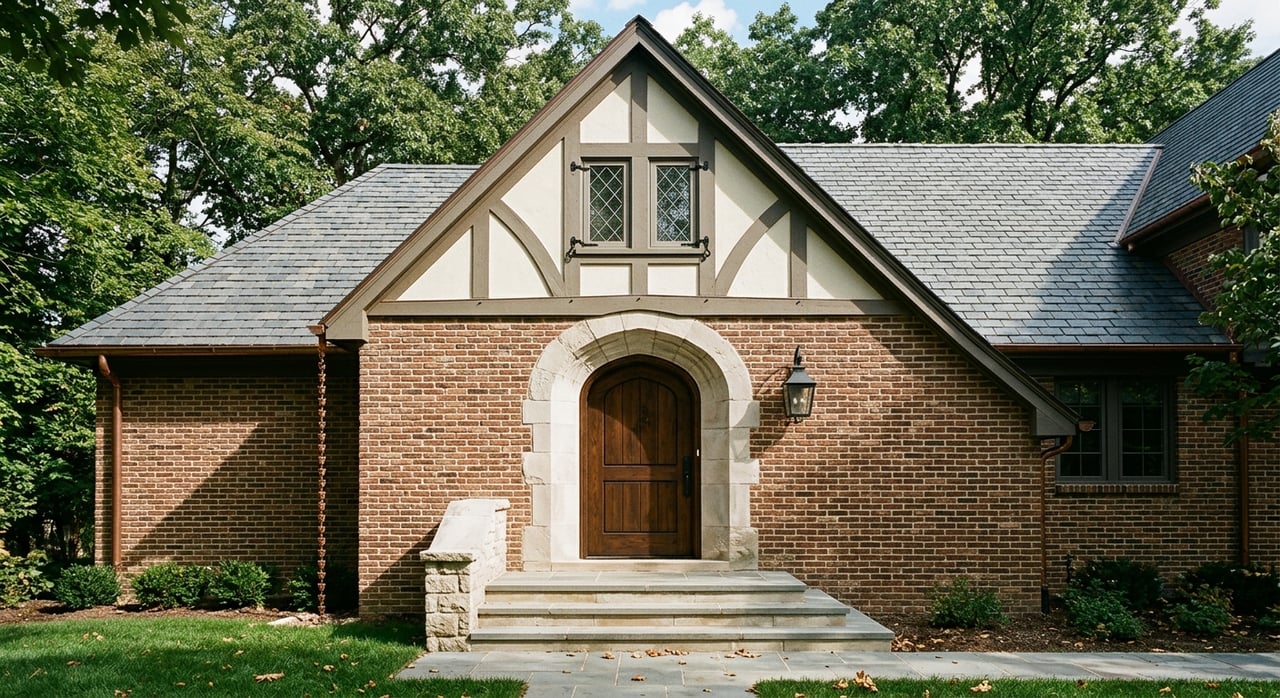
Tudor Revival is the next major style group in Guilford. These homes tend to feel more picturesque and less formal from the curb, with asymmetrical fronts, varied gables, and strong material contrast.
You may notice brick on lower levels, with stucco and half-timbered details above. The overall massing often feels closely tied to the lot and landscape, which makes these homes especially expressive within Guilford’s tree-lined setting.
Beyond Colonial Revival and Tudor Revival, Guilford includes homes with English vernacular, Arts-and-Crafts, Renaissance Revival, French, and Italian influences. Neighborhood history sources also note examples described as French country, Jacobean, Italian Renaissance, and Italianate revival.
This mix is part of Guilford’s appeal. Even when two homes are clearly different in style, they often still feel like they belong together because the neighborhood plan emphasizes consistent setbacks, greenery, and visual harmony.
Some of Guilford’s most distinctive houses are also some of its rarest. The neighborhood includes a small number of Spanish Revival or Spanish Mission homes, along with Mediterranean-influenced designs.
These are not the dominant look in Guilford, but they do add depth to the architectural mix. If you come across one, details like a tile roof or more Mediterranean massing may make it stand out from the colonial and Tudor homes nearby.
One of the most important things to know about Guilford is that curb appeal here is about more than the house itself. The neighborhood was planned so that street, lot, landscape, and home all work together.
That means you should pay attention to how a house sits on its lot, how much lawn and tree canopy surround it, and how it relates to neighboring homes. In Guilford, those elements are a major part of the value and everyday experience.
Guilford reads as a detached-home neighborhood rather than a rowhouse district. It is known for large single-family detached homes that range from smaller cottages to much larger residences, all set within a landscape of mature trees and period streetlights.
It is best to think of Guilford as a larger-lot Baltimore neighborhood rather than assume every parcel follows one standard size. Historic materials emphasize generous setbacks and lawn space, and current detached-home listings around roughly 0.41 and 0.44 acre give a helpful sense of the scale buyers often see.
In many neighborhoods, buyers focus mainly on interior square footage. In Guilford, the setting can matter just as much.
A home with strong frontage, mature landscaping, and the right relationship to the street may feel very different from a similarly sized home on a more exposed lot. That is part of what gives Guilford its long-term appeal and why the neighborhood often feels so visually calm and established.
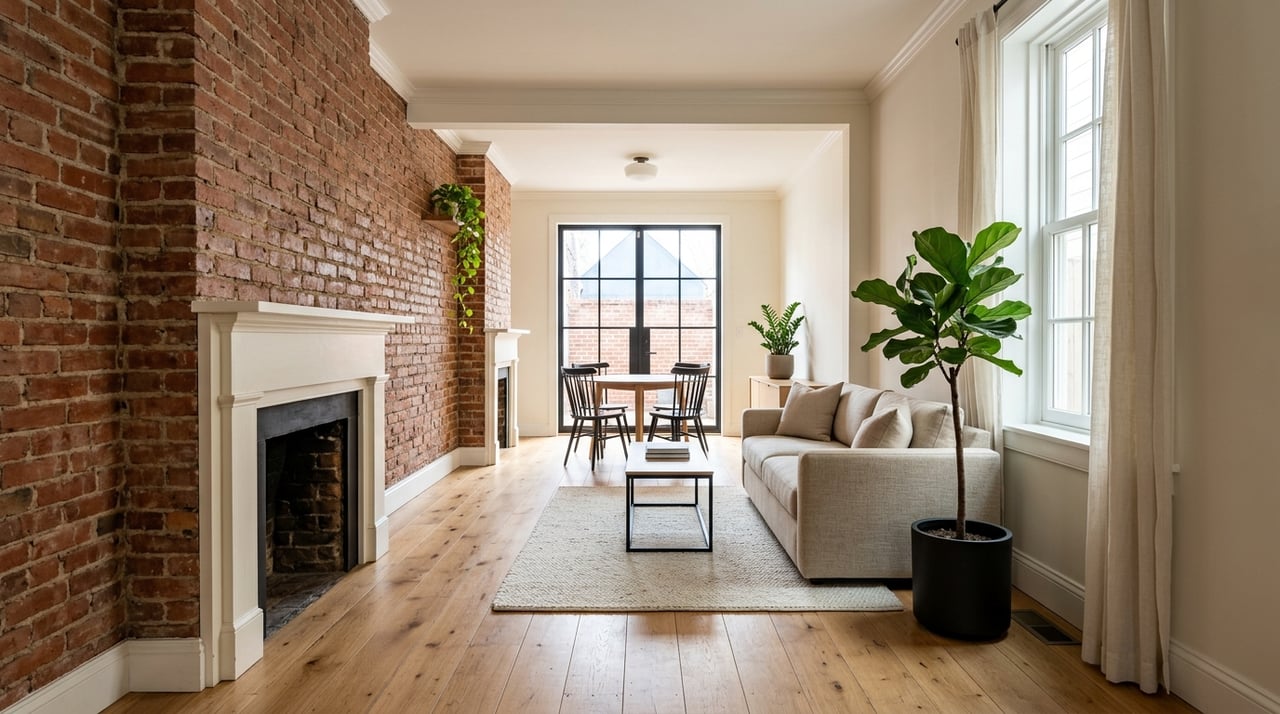
Because Colonial Revival forms are so common in Guilford, many homes reflect center-hall planning and more traditional room arrangements. You may find a layout with clearly defined living, dining, and circulation spaces rather than one large open main level.
That does not mean these homes cannot be updated. It does mean that if you hope to create a more open layout, you should plan carefully and understand that period homes often require a more thoughtful approach to change.
Guilford’s architectural character is not protected by chance alone. The neighborhood has a private covenant review system that shapes what exterior changes can look like, and that matters in a very practical way if you are buying or planning work.
For many buyers, this is actually part of the neighborhood’s value. The same review framework that requires approvals also helps preserve the look and feel that make Guilford so desirable over time.
According to the Guilford Association, all exterior alterations to existing structures require a written application. That includes exterior paint color changes, significant landscaping, and new structures, and written approval must be in place before work begins.
If you are buying in Guilford, it is smart to verify whether past exterior work received the proper written approval. That is especially important before closing if the property has had visible updates.
Windows are a major issue in historic homes, and Guilford has specific guidance. The Association says wood windows play an important role in a home’s appearance, vinyl-framed windows are not approvable, and replacement windows must match original size and muntin pattern.
The guidance also encourages repair before replacement. In some cases, well-matched storm windows may be approved when they complement the primary windows.
Roofing choices in Guilford are also tightly regulated. The architectural guidelines say slate or terracotta tile should match existing conditions, and asphalt shingle is not allowed as a replacement material.
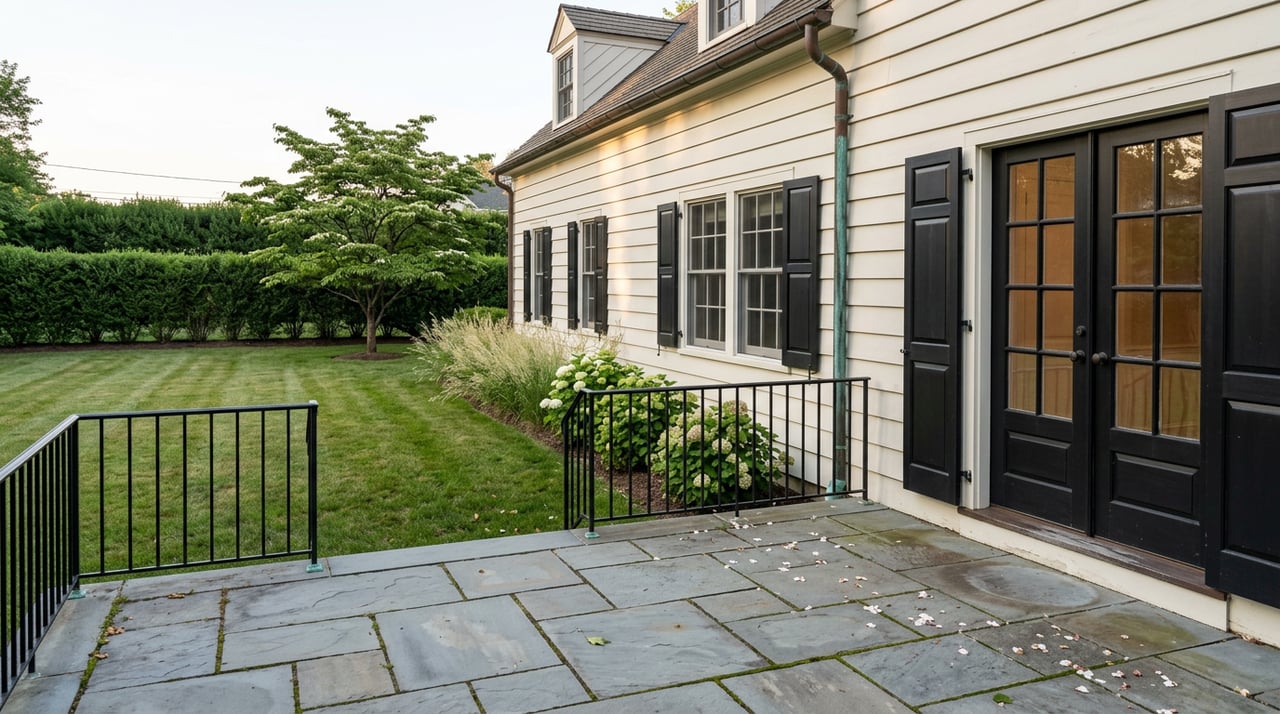
The same guidelines note that gutters in Guilford are typically half-round, with copper preferred. If you are budgeting for future exterior maintenance, these material requirements should be part of your planning.
If you are thinking about adding a porch, enclosing a sunroom, building a deck, or expanding the home, expect a detailed review process. Guilford’s guidelines require plans, site drawings, and material information for additions and enclosures.
New work should harmonize with the original house, adjacent homes, the street, and existing trees while also meeting setback and free-space requirements. In other words, design matters here at both the house level and the neighborhood level.
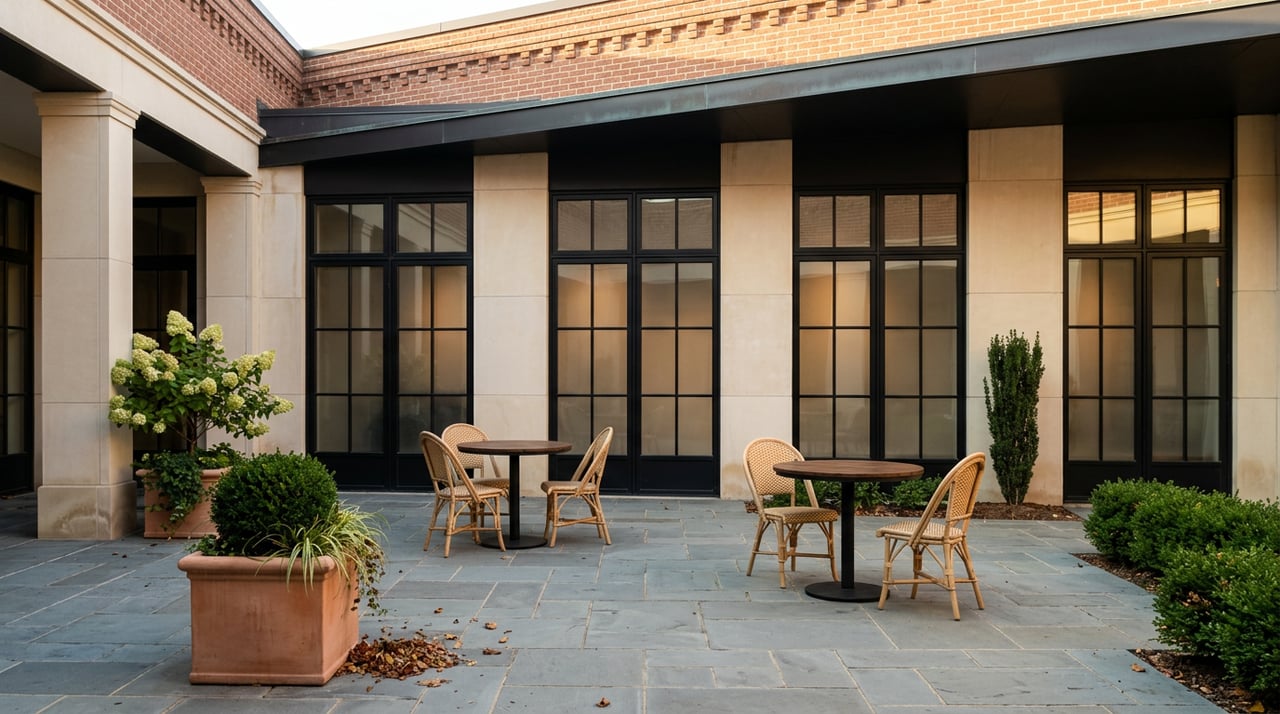
In Guilford, landscaping is not an afterthought. Significant grading, tree removal, planting plans, fences, walls, parking pads, patios, pools, and garden structures all require approval.
The guidelines also emphasize saving mature trees whenever possible. Substantial landscape changes between the sidewalk and street are generally not approved, which reflects how important the streetscape is to Guilford’s identity.
One reason buyers continue to value Guilford is that the neighborhood combines architectural variety with a consistent visual framework. Detached homes, mature landscaping, and a preservation-minded review system help protect that experience over time.
The Guilford Association states that its covenants are intended to protect the aesthetic environment and help maintain property values. For you as a buyer, that means changes that preserve original materials, scale, and proportions are generally more aligned with the neighborhood than visibly modernized exterior replacements.
For some homeowners, qualified rehabilitation work may open the door to tax credit opportunities. The Guilford Association notes that most homes in the neighborhood qualify as contributing structures, generally because they are more than 50 years old.
The Maryland Historical Trust says the homeowner tax credit supports repairs or changes that keep a historic property functional while protecting important historic features. If you are considering a major project, this is one more reason to look closely at the property’s historic status and planned scope of work.
If you are shopping in Guilford, it helps to look beyond finishes and square footage. Pay close attention to the style of the house, the lot, the tree canopy, the setbacks, and the condition of original exterior materials.
You should also ask practical questions early. Were prior exterior renovations approved in writing? Are the windows, roof, and landscaping in line with Guilford guidelines? Those details can shape both your future costs and your options as an owner.
Guilford rewards buyers who appreciate architecture, setting, and stewardship. When you understand how those pieces work together, you can evaluate homes here with much more confidence.
If you are considering buying or selling in Guilford, working with a local advisor who understands both the neighborhood fabric and the details behind the transaction can make all the difference. Reach out to Christina Giffin for thoughtful guidance tailored to Baltimore’s most distinctive residential neighborhoods.
Christina take great pride in the relationships. She builds and always works relentlessly on the client's behalf to help them achieve their real estate goals.